

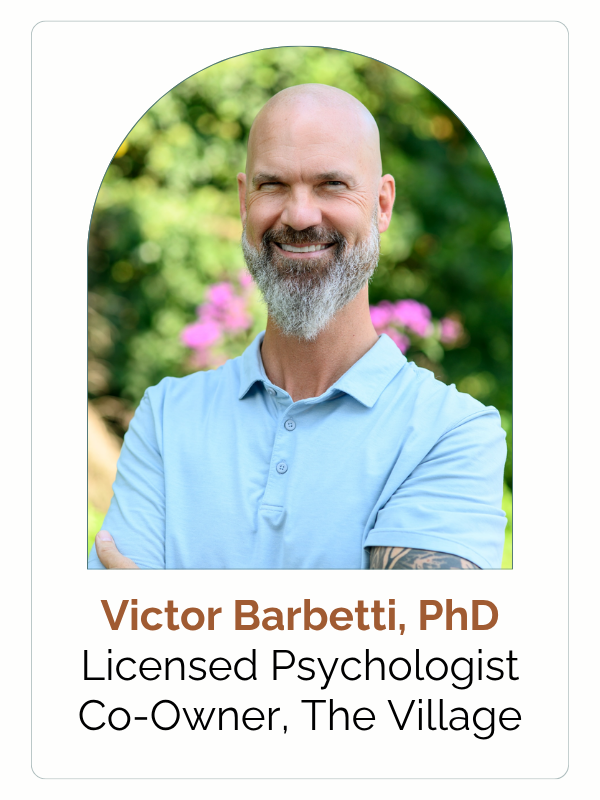
Getting to Know Dr. Victor Barbetti
/
A conversation about therapy, coffee, dwelling, and the art of noticing.
This month, we’re slowing down for a conversation with Dr. Victor Barbetti, PhD, Licensed Psychologist and Co-Owner of The Village. From the questions that continue to shape his work as a psychologist to meditation, community, coffee, architecture, and the ways we choose to pay attention, Victor offers a glimpse into the ideas—and everyday moments—that have stayed with him throughout his life and career.
You’ve been a psychologist for a long time. What originally drew you to psychology?
I think I was interested in psychology before I knew there was a word for it. I’ve always been fascinated by people—how we make sense of our lives, why we do the things we do, how relationships shape us, and how two people can experience the world so differently.
Eventually that curiosity, and the influence of some pretty great teachers, led me to existential and phenomenological psychology, which gave me a language for something I already sensed: psychology isn’t only about what happens inside a person. We humans are always living in a world—with other people, in bodies, in relationships, in places, within histories. To understand someone psychologically, you have to understand something about the world they’re living in.
After decades of doing therapy, what still fascinates you about it?
That people can, in fact, change.
“Something that seemed impossible becomes possible because the person encountering the situation has changed.”
I don’t mean that in a sentimental way. Human beings can get remarkably stuck. It’s why most people come to therapy. We have a remarkable knack for repeating patterns, defending ourselves, avoiding difficult truths, staying in relationships or situations that don’t fit us, and sometimes organizing our lives around fears we barely recognize.
But we also have this extraordinary capacity to see ourselves differently and suddenly discover possibilities that weren’t visible before. I’ve watched that happen thousands of times and it still amazes me. Something that seemed impossible becomes possible because the person encountering the situation has changed.
Has your idea of therapy changed over the years?
Definitely. I used to think that therapists were supposed to have more answers.
Now I think my job is less about telling people how to live and more about helping them see their lives clearly enough that they can participate in them differently, and more fully.
Symptoms matter, of course. Anxiety matters. Depression matters. Trauma matters. Relationship conflict matters. But at the same time I’m interested in the whole person and the life they’ve been trying to make. Where do you feel most alive? Where have you become constrained? What are you avoiding? What matters enough that you’re willing to tolerate discomfort for it? Where are you living congruently with yourself, and where are you feeling off kilter or out of balance?
Those questions interest me much more than simply asking, “How do we make this symptom disappear?”
You’ve also taught yoga and meditation classes, and have practiced meditation for years. How does that connect with psychology for you?
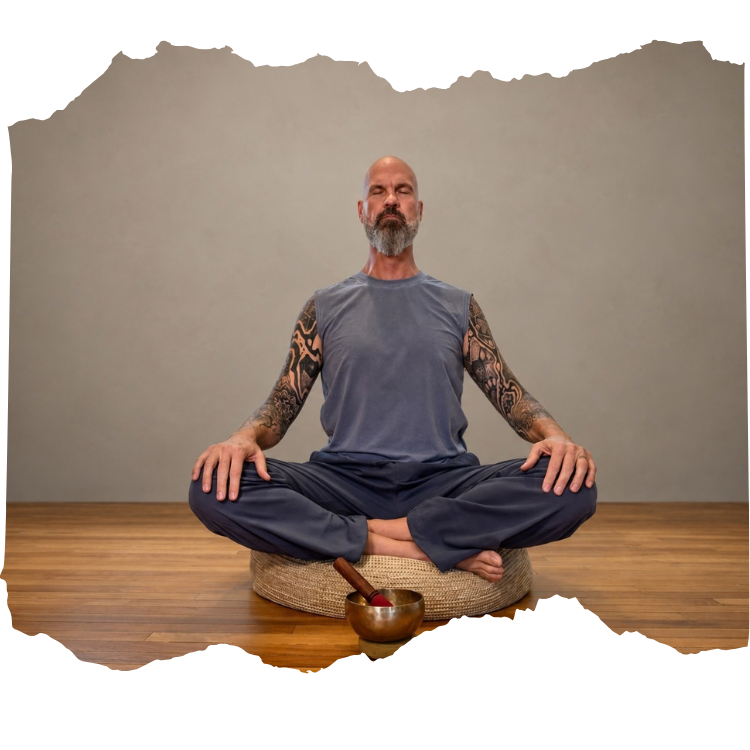
Psychology can become very cerebral. We can talk endlessly about our lives without necessarily experiencing them differently.
Yoga and meditation bring us back to embodiment and attention. What is happening right now? What does anxiety actually feel like in your body? Can you notice a thought without immediately believing it? Can you remain present with discomfort instead of reflexively escaping it?
I don’t think meditation is about making your mind blank. It’s about training our minds to notice. And increasingly, I think the quality of our lives, both positive and negative, has an enormous amount to do with how we pay attention.
What’s one misconception people have about meditation?
That you’re bad at it because your mind keeps wandering.
“Meditation teaches us the art of coming home.”
Your mind wandering is the practice! You notice that you’ve disappeared into random thoughts, and you return. Then you disappear again. Then you return again.
There’s something beautiful about that little movement. We spend enormous portions of our lives somewhere other than where we actually are—replaying yesterday’s events, anticipating tomorrow’s tasks, looking at a screen, rehearsing an argument from 10 years ago. Meditation teaches us the art of coming home, of being present in our bodies and to ourselves.
You’ve spent a lot of your career building Village Therapy. What does “Village” mean to you now?
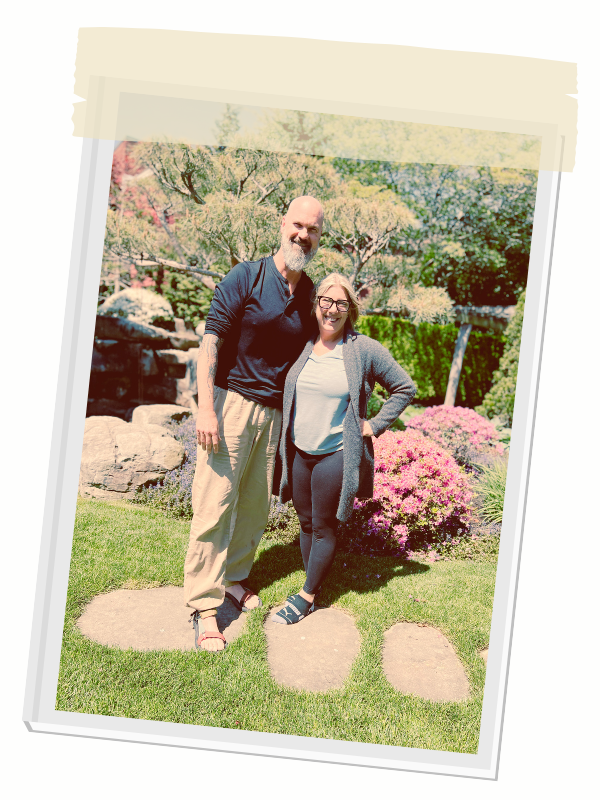
More than I anticipated when we started 15 years ago! Kristy and I had no idea that this is where it would lead. We’re both so grateful for what Village has become.
A therapy practice can easily become a collection of clinicians who happen to share office space and a website. I’ve always wanted Village to be something more communal than that—a place where clinicians can develop their professional aspirations, where different disciplines can work alongside one another in a supportive environment, and where therapy is part of a broader conversation about psychological life.
That’s why things like yoga, meditation, groups, workshops, teaching, writing, and community events make sense to me as part of the Village. Therapy happens in an office, but psychological life certainly doesn’t stay there.
What do you think makes a good therapist?
Curiosity.
Training and experience matter enormously, but I think therapists have to remain genuinely interested in the person sitting across from them. The moment I think I already know who you are because I know your diagnosis, your history, or your “type,” I’ve stopped encountering you.
And sustained healing and change happen through genuine human encounters, not merely knowledge transfer, advice giving, or new and exciting “optimization” regimens, though those things can all be very helpful in their own way.
What thinkers have influenced you most?
There are too many to name, but Heidegger, Merleau-Ponty, and Levinas from the phenomenological and ethical philosophy traditions, as well as teachers such as James Hillman, Bernd Jager, Robert Romanyshyn, and Alphonso Lingis.
The work of Carl Rogers has also stayed with me, particularly his idea of congruence—the importance of our lived experience and the life we present to the world coming into better alignment. More recently, I’ve found myself returning to Carl Jung and his idea of “individuation” and the importance of integrating disparate parts of ourselves in order to move into healthier ways of relating to self and others.
Outside psychology and philosophy, contemplative traditions have probably influenced me just as much. Buddhism and yoga’s recognition that suffering is intertwined with attachment and aversion strikes me as one of the deepest psychological observations ever made. The insights of Patanjali’s Yoga Sutras are profoundly relevant to our modern-day psychopathologies and cultural “dis-ease,” and more needs to be written about this.
Okay, enough philosophy. What does an ideal Saturday morning actually look like?
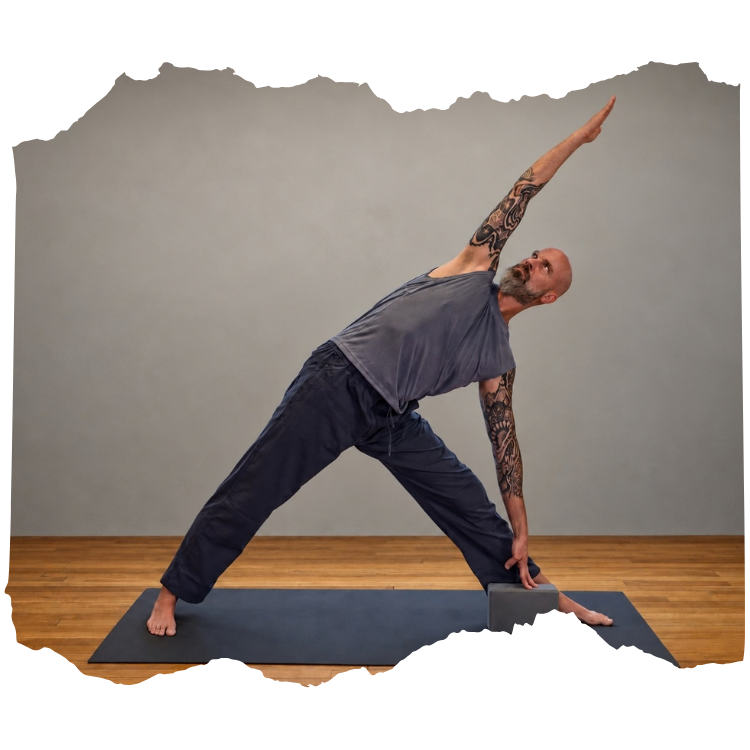
Most mornings I’m usually up around six, which means I get a few quiet hours when nobody wants anything from me. I make coffee, briefly check emails, take a 60–90 minute urban hike with my pup around Highland Park, come home and do some yoga, meditate for a bit, maybe do some writing, and then shower and start my day.
As I’ve gotten older, I’ve become more protective of mornings. There’s something wonderful about having a few hours when life hasn’t started bossing you around yet. It’s my contemplative time where I can center and ground myself.
What might people at Village be surprised to know about you?
Maybe that the person talking about existential phenomenology in the staff meeting also spends a considerable amount of time hanging out with friends, hunting through architectural salvage shops, working on an off-grid cabin in the Adirondacks, watching disturbing horror movies with my wife, and obsessing over whether a piece of furniture is three inches too wide for a particular wall or if a piece of art belongs somewhere else in the house.
I’ve played soccer and sports since I was five. I’ve run a marathon, rock climbed and backpacked, played in two different bands, and consider myself an amateur plant enthusiast. I’m also slightly obsessed with houses and architecture, art and music, furniture design, crafted objects, and curated spaces—especially things that are strange, old, handmade, or have some history attached to them.
I’m fascinated by human dwelling: what makes a place feel inhabited rather than merely occupied? What makes somewhere feel like home? How do we align our interior and exterior spaces so that we feel most at home in our bodies and in our world?
What’s something you take much more seriously than you probably should?
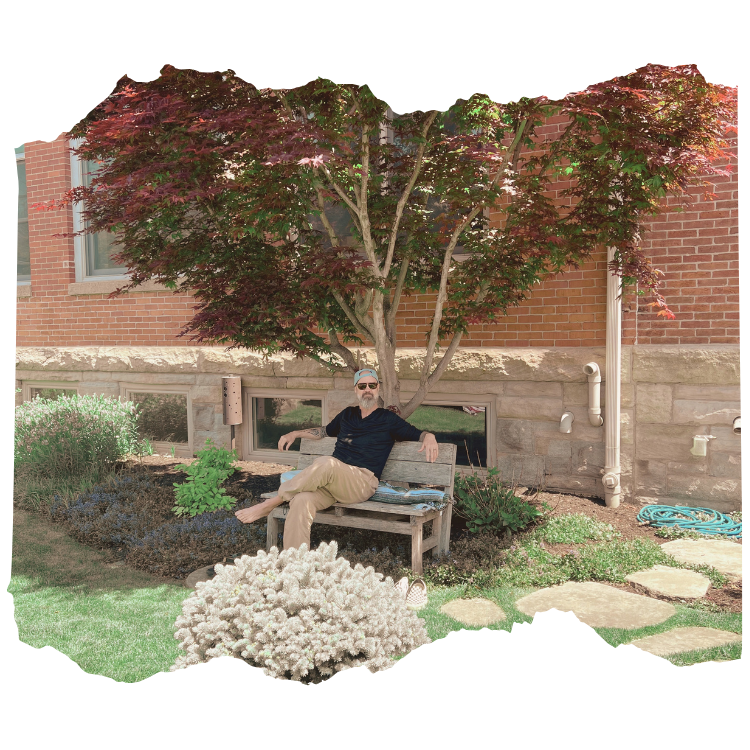
Coffee! I can talk for hours about coffee.
Also lighting and ambience in buildings. Music, bands and playlists. Where I sit in a restaurant. Whether a room feels right or balanced.
What are you curious about lately?
Our attention.
I keep returning to how much of contemporary life is designed to capture and fragment our attention. Phones, notifications, algorithms, advertising—there’s an enormous competition underway for this very finite human capacity.
I’ve been thinking about attention almost as an ethical question: What deserves my attention? Because whatever we repeatedly attend to eventually becomes part of the world we inhabit.
Incidentally, I wrote my dissertation on ADHD many years ago and I’m surprised that it continues to be relevant to the work I’m doing today.
Finish this sentence: “Lately, I’ve been thinking about…
...how much gratitude is a form of seeing.
We often talk about gratitude as thankfulness, which it certainly can be. But I think there’s something prior to thankfulness: noticing that something is beautiful, astonishing, fleeting, funny, tender, or simply good.
A tree swaying in the wind. Morning light coming through a window. My dog acting completely ridiculous. Someone you love sitting across from you drinking coffee and smiling at you. The fact that any of this is happening at all.
The world is constantly offering itself to us, and we are remarkably capable of missing it.
Maybe gratitude begins when we don’t.
Dr. Victor Barbetti is a clinical psychologist and Co-Owner of The Village Center for Holistic Therapy, where his work invites curiosity, presence, and a deeper connection to our lived experience.
This fall, Victor will be offering Third Thursdays Community Meditation, a monthly meditation class at The Village’s West End studio, as well as his quarterly Cacao Ceremony at our Shaler studio. To learn more about Victor, his work, and upcoming offerings, visit villagetherapy.org/victor.